Showing posts with label Pedagogy. Show all posts

Wednesday, January 11, 2012

Lighten up already!

As I was saying on Monday, one of my goals for 2012 is to take things less seriously, especially in the classroom. The thing is, disposition is a tough nut to crack, and requires a lot of introspection that sometimes I'm not really good at. I mean, I've been trained as a critical thinker by some of the best - that's what a Ph.D. from a leading program at an R1 university should get you. So, I can train an analytical eye on movies, on political discourse, on pedagogical practices and take them apart six ways to Sunday. But, my own actions and their underlying motivations, especially their emotional impulses - that's a much more slippery target.


And yet, it's an area that needs focus and improvement. I'm a good teacher for a number of reasons: I'm organized, knowledgeable, enthusiastic and rigorous. I ask a lot of my students, but nothing that I don't believe that they can't achieve and nothing for which I don't provide structure and support. But a side effect of this seems to be that I can come off as abrasive, even aggressive. One of my student evaluations from last semester nails it:
The only thing I would change about Dr. McLaughlin's course is that he could have a little more relaxed environment in his classroom. It can be very stressful to have a professor with such high expectations sometimes and I have discussed with other students of his that it causes some people to not speak up for fear that they will answer incorrectly
There's a fine line between apprehension and effective learning. I do want my students to think about what they say, but I don't want them gagged by fear. This is counter-productive: it limits what students are putting in to the course and what they can, as a group, get out of it.

So, how can I go about creating a "more relaxed environment" in the classroom? Honestly, this runs counter to nearly every instinct I have as an instructor. Class-time doesn't have to be all work and all seriousness all the time, but it should be focused, structured, productive and include attention to the task at hand with appropriate feedback.

Ah... there's the kicker, isn't it? Sometimes, a light touch is the best way to go. So, here are some things that I'm going to try out and focus on this semester:

Empathy
This past Monday morning, on the very first day of class, before the session had even begun, I had a student shyly approach me with an old edition of the textbook.
She started: "Is this -"
"Nope," I cut her off.
Whoa. Teacher fail. Imagine that being the very thing you hear from your professor? Ouf. I tried to back-pedal quickly, highlighting the improvements of the new edition, but the damage was done. I need to avoid doing these kinds of abrupt, insensitive interactions. It's not that these happen often, but acutely negative moments like this stick in a person's mind much more than a hundred gentle smiles.

So, the moral of this story is: take a moment; smile; consider where the student is coming from, not just what I want them to accomplish or how I want them to go about doing it.

Humor
To make up for that gaffe, alas not with the same class, but karma-wise, at least, I had an effective humorous moment on Monday, too. I was presenting the textbook; pointing out how well it's organized and how it presents its information (that is, grammar, vocabulary, etc.; some pretty dry stuff on its own) in an engaging and often visually-stimulating way. "It reminds me of a kid's book," I said, off the cuff, and then proceeded to read to the class in my best Kindergarten Teacher Voice:
Make sure to learn the correct article with each faire expression that calls for one. For faire expressions requiring a partitive article or indefinite article, the article is replaced with de when the expression is negated.
Silly, but effective. The students learned how to best do their homework, prepare for class and interact with their textbook and I earned some kudos for poking fun at my own textbook.

Games Without Consequence
I often play games, including Jeopardy! for unit reviews, Pictionary for vocabulary lessons, and even Taboo! But I attach some sort of consequence; usually, this is extra credit for an upcoming assessment or assignment. My thinking behind this is that the score is a motivator; their performance is more pertinent to their course experience.

However, an unintended - but no less important - consequence is that even fun things become stressful. It's time to play just for the sake of playing. It's okay to let your hair down and kick about every now and then. Why not? It's just a French class. (Nevermind that just participating in the game helps them learn, and having fun improves their disposition towards the course...)

Don't Take it Personally
This is perhaps the thing at the heart of my problem. I internalize a lot of my coursework; it's really an extension of myself. I put my ego out there every day. So, when students fail to reach my expectations, when they are unprepared or just having a blank moment - I feel like I've failed. Yup, I have failed. This is frustrating, and sometimes I take this frustration out on them. This is doubly bad, because not only are they embarrassed for not knowing the answer in front of God and everybody, but here I am chastising them for it in front of God and everybody.

It's okay to fail. I want my students to fail every now and then; failures and problems are the beginning of learning. But I have to let them know that during class-time, I'll be there to catch them, to laugh it off with a joke and to help them find a way to succeed.

So, here's to a semester of having more fun and letting the serious business of second language acquisition in a university environment become a little less so. Let's start with this:

Wednesday, November 2, 2011

Portal: Apologias Abound

Why do so many academics feel they have to apologize for bringing video games into the classroom? It seems like every last paper and book I'm reading begins with "Just hear me out, despite everything this is totally a good idea."
After a brief hiatus from the blog because life decided to happen all at once, I've decided that Wednesdays will be dedicated to my current research on Portal - that quirky, engaging game from Valve Software. If this is your first time reading about my Portal ruminations, you might like to start here where I talk about the hidden depths of the game and its 2011 sequel. I'm developing a paper about the pedagogical and philosophic dimensions of a video game to present at Popular Culture Association and American Culture Association conference in April, 2012.

Since I've already developed a few ideas that I want to explore further, the first step is some research. What have other people said about Portal and Portal 2? The list of blog entries and reviews is pretty substantial, and there are some very good ideas out there. But there's a problem: none of these are really peer-reviewed publications; that is, they aren't published by professionals after (usually anonymous) review and editing by fellow specialists. Basically, no one in Academia has talked about Portal specifically. It's a little disappointing, but also understandable and exciting; there are no ideas for me to use as a springboard, but that's because this game is so new, in a rather niche field, and it means I'm really breaking into new fresh territory with this project.

Still, I need some outside research for a well-rounded analysis. Solution: broaden the scope to video games and teaching. Ah hah! With some judicious trimming of search parameters, I've snagged about twenty peer-reviewed articles. Looking towards books, it's no secret that Kennesaw State's physical holdings are meager in any area. However, we have a wonderful new tool via EBSCOhost's new eBook database. Voilà: a dozen full-blown book-length studies and anthologies. So now I have a nice, hefty stack of reading to sift through for ideas.

I haven't finished, but I wanted to talk about a recurring theme in many papers and introductory chapters: an apologia for video games. It's sad and silly all at the same time. No one feels the need anymore to say, "Hey, this Socratic method thing is pretty wild, but listen, it can be effective." (Though apparently, it can get you fired.) Neither does anyone make formal arguments about the inclusion of multimedia elements in lesson plans or that wild and wacky thing called a whiteboard.

The notion that the pedagogical utility of games in general and video games in specific needs to be carefully defended is silly because play is fundamental to learning. Games are effectively heavily-constructed problem-solving tasks with built-in formative feedback. They accomplish almost naturally (I say "almost" because they are designed, after all), what good teachers struggle to do with every lesson: motivate students to confront, analyze and overcome a challenge.

This mania for apologia is sad because it seems like so many academicians and pedagogues have their serious-pants on a little too tight. Don't they remember the joy of play, the freedom of exploration and jubilation of victory; those "Eureka!" moments? Didn't they learn something from those experiences, too?

On one hand, of course, we have to realize where this skepticism - or perceived, potential skepticism - comes from. Video games have a bad rap, so much so that there have been Congressional hearings about violence in contemporary video games and their potential to warp impressionable minds, blah, blah, blah. Videos games are largely thought of as commercial products and diversions - so much so that educational games have developed their own moniker: "serious games." It's difficult to think of a more Orwellian paradox of a term.

To boot, a little skepticism is healthy in the professional realm. Technology should serve instruction, after all; the latter should not bend to the latest fad just because it might better motivate a slice of the demographic pie. While games may be an exciting innovation for effective instruction, the jury's still out about how well they contribute to effective learning. That is, do players/students retain the knowledge, skills and attitudes they acquire during play/study and are they able to apply them later in a different context? To a certain degree, it's a chicken and egg conundrum. There's relatively little evidence because video games as pedagogy are thin on the ground and not many people are using video games to teach because the hard evidence isn't there. (Round and round we go...) Moreover, developing effective video games is a complex endeavor that usually entails a whole team of people with divergent sets of skills, aims and backgrounds. Even more than that, recent findings are conflicting: half of the studies show that games are more effective than traditional instructional techniques, the other half say "not so much..." (Full disclosure, there's a third edition of this book that I've just ordered. Maybe there's something new since 2008.)

But what I'm really interested in with Portal is not so much its uses in the classroom (though I can imagine many), but the way it models good teaching design. Michele Dickey is on the right track with her 2005 article "Engaging by Design," analyzing computer game design and its potential as a model for instructional design. Put simply: good video games are good lesson plans.

Check out her hypothesis yourself the next time you're playing a video game for the first time. Game tutorials are short-cuts: deductive lessons that are time-effective, but often retention-poor. More intelligent games (like Portal) teach you the inherent rules as you go along, using concepts like Vygotsky's zone of proximal development to help you slowly pick up the necessary skills to succeed, and then they let you jump the track and go wild behind the scenes.
Michele Dickey. "Engaging by design: How engagement strategies in popular computer and video games can inform instructional design." Educational Technology Research and Development. 53(2). 67-83.

Wednesday, October 26, 2011

Changing Paradigms

You may have seen this video before; it's been floating about various social networks for a while now. This infographic animate was created from a speech given by Sir Ken Robinson upon his acceptance of a Benjamin Franklin Medal from the Royal Society of Arts in London. It's a fantastic dissection of what's fundamentally not working in western education today.


As an educator, this gives me certain grounds for pause. I am very much imbricated in this industrialized, machine-like system based on a twisted, out-dated version of Enlightenment ideals. But not passively. This is what I do to change the educational paradigm, one class session at a time.

Pose Questions
As I've discussed earlier, posing questions to my students is a cornerstone of my teaching technique. Some find this off-putting and even hostile, at least a first, but I also make it clear that students can pose me questions. In fact, I encourage and sometimes even require it. Class sessions are regularly punctuated with "Avez-vous des questions ?" (Do you have any questions?) and I always do my best to respond meaningfully to those questions. Some times these are "teachable moments," either a particular problem that lets the class and instructor explore a concept together or a bridge to new information.

For instance, a recent session started with the question "Que feriez-vous avec mille dollars ?" (What would you do with a $1000?). The main objective was to allow students some personalized time to express their wishes and use the conditional mood. In response to this question, one student stated they would buy an iPad with a special case. But how do you say "case" in French? There are dozens of ways, and they're pretty context-dependent. But this was a perfectly teachable moment. I opened WordReference and with the class we started sorting through the possibilities. Way down the page, eureka!

casen(sheath)étui nm
Put your glasses back in their case.
Remets tes lunettes dans leur étui.

I never flinch from admitting I don't know an answer; it's always a springboard to a "Let's find out!" moment.  (Or, at the very least from a "Why don't you look that up and share your findings with the class?" moment.)

More than that, one of my very first lessons with students of any level is how to pose questions in French. Class is often a chorus of Comment dit-on ...? (How do you say...?) and that's okay. I really love it when students begin asking Pourquoi? (Why?) and Mais comment...? (But how...?)

Have Fun (and Be Creative)
Critical (self-)reflection is an effective teaching tool, but all work and no play makes Noah a dull prof. Moreover, students are more than just cogitating machines; they have feelings, like anxiety and pride, and they enjoy being entertained. I work hard to have fun in class. Some times this is a simple as making an slightly off-color joke. ("Automobile traffic" in French is la circulation - like in your veins; but le trafic refers to drugs. In our lessons about cars, many student unwittingly complain about the local drug trafficking problem on campus.) Some times this is out-and-out games, like Simon Says, or Jeopardy! Mostly, I seek to create an atmosphere that encourages students to relax and therefore feel free to make mistakes.

You read that right, I want my students to screw up. Because mistakes are the beginning of learning. Every one messes up; the key is what you do next. In a positive, structured atmosphere like the one I try to create in my classrooms, mistakes are acknowledged but more so are corrections. I try to keep the former to a minimum, a cocked head (like a puppy), a half-breathed "Euh...?", a simple prompt to indicate "That's not quite right..." But corrections are praised, and loudly. I applaud; I laugh; I constantly give thumbs up.

Related to fun, creativity and personalization play an important role in my courses. The ability to express your own meaning, even simply, in a foreign language is quite an achievement. To accomplish this, I seek to find the right balance between structure (often, prompting questions) and open-ended tasks. My students interview each other a lot. (There's that posing questions thing again.) Last unit, one class wrote letters to the president of the university suggesting what kind of building we should construct next on campus; presently, I have another class writing reviews of a panoply of Francophone movies, many of which I've never seen before. Last summer, students created guided tours of Francophone destinations and crafted websites to promote them.

Which leads me to the last point:

Make Connections
For me, the pinnacle of education is the ability to make meaningful connections between people, cultures and various fields of inquiry. It's more than just getting your classmate's email address, or learning about why the French tend to have smaller cars than Americans. That's just information, trivia, just the beginning of wisdom. What I really want to see is a student create a third space that bridges the gap between two cultures. To explain to a French person why our American cars are so big and why we take them everywhere, to adapt a French poem for an American audience, to overcome misunderstanding with patience and a will towards compromise. To be more than aware, to be inquisitive, to be creative: to change the paradigm.

Wednesday, October 19, 2011

Portal


Speedy Thing Goes In...
Portal is a first-person puzzle-platform game, released by Valve Software in 2007 as part of a product collection called the Orange Box, (Amazon, Steam) which included Half-Life 2, its sequels Episode One and Episode Two, and Team Fortress 2. Unlike its violent (if very smart) counterparts, Portal was a revolution in gaming.

In Portal, you play as Chell (gasp! a female protagonist! and a non-sexualized one!), navigating your way through a series of physics and logic-based tests. Your only weapons are your own mind and a portal device. On most surfaces in the game, the device can place two portals, which create a visual and physical connection between two locations in three dimensional space. A very important aspect of using the portal gun is the principal of redirected but conserved momentum: objects (or people, like Chell) maintain speed when traveling through the portals. This allows the player to access otherwise impossible areas. Check out one of the most challenging and rewarding levels, Test Chamber 18:

Beyond innovative game-play, Portal is great because of its (ostensible) antagonist: the rogue A.I., GlaDOS. Voiced by Ellen McLain, GlaDOS is a sinister and snarky presence, part guide, part personal trainer and all psychopath. It seems odd to state that this is really a large source of Portal's charm: GlaDOS is the player's clue that there is a subtext to the straight-forward problem-solving we're doing. She takes over the smirking role that many of us have when playing first-person shooters, sticking her tongue firmly in her cheek for us.
Portal Pedagogy
The revolutionary nature of Portal (and its 2011 sequel) goes beyond these aspects. Once I played the developer's commentary, I discovered a level of unsuspected profundity. First of all, the game design has a sophisticated grasp of teaching, especially the concept of the "zone of proximal development." In brief, this theory of cognitive development holds that people learn best when we give them tasks that are just a little beyond their mastery. When provided with appropriate models, people figure out how to complete the tasks on their own. And then there will be cake.

Or not, in Portal, but the point is that this game is the essence of well-designed experiential learning. The first few levels are literally "this is how you play the game," but they never feel like a sit-down lecture. They are instead a series of discrete problems to solve, slowly increasing in complexity.

To boot, Valve's Source game engine recreates physics in a very realistic manner. So realistic, in fact, that educators are using Portal to teach about the physical properties of the universe, to interest children in things like math, science, logic, spatial reasoning, probability and problem-solving.


Portal Philosophy
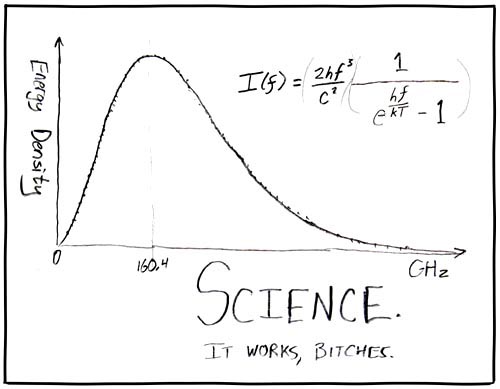
Especially with Portal 2, the franchise goes beyond even those utilitarian domains. The addition of the character Cave Johnson allows the game to slyly lead the player towards an exploration of just what is science? The apocalyptic results of Aperture Science's experiments, it seems quite evident that science is not that they've been doing. But what I really appreciate about the game is that it doesn't hammer you with "This is how you define science, idiot!" Instead, it rewards your critical thinking. Because science is precisely how you win the game: observing, hypothesizing, testing and checking results. Think critically and creatively at the same time.
http://xkcd.com/54/
Beyond an inductive exploration of the nature of science, the story and characters of both Portal and Portal II can lead us to all manner of investigations : about power (economic, technological, political), about history (what happened to the game world?), and even about feminism (a computer game where the female characters outnumber and consistently out-think the male ones is a rare gem, but that brings us back to ideas of power and the binary trap of patriarchy...)


...Speedy Thing Comes Out.
This is really just a sketch of some of the issues that I want to explore more with Portal and Portal II. There are already quite a few folks out in the blogosphere that have ruminated on some of these things (especially GlaDOS) and over the next while I start talking about those ideas. I'm actually developing this for the Popular Culture Association and American Culture Associate national conference in April.

Wednesday, October 5, 2011

Learning to Learn

So, I'm applying for a promotion, hoping to move up from a yearly contract as an lecturer with a huge course-load but no expectations or either service or scholarship to a tenure-track position as a professor of Foreign Language Education where the service and scholarship that I'm doing anyway will be more rewarded. It's an equally exciting and daunting prospect as I put myself up for, effectively, judgment by my peers.

A part of any application for a position is academia is defining your "Philosophy of Teaching," those basic principles that guide the crafting of lesson plans and assessment tools. For many years, this was a constant preoccupation for me as I revisited the pros and cons of what I had been doing and seeing what worked and what didn't. But, after 11 years of foreign language instruction (wow, more than a decade now...), I've really established some comfortable parameters, to the point that I pretty much copy/paste the same paragraph whenever my work comes up for review:
My philosophy of teaching has three major tenants: 1) respect the free-will of the student, 2) serve as a guide and a facilitator, 3) adapt to the needs of the student. Respect for free will is paramount in avoiding the “Atlas Complex,” which engenders little more than the parroting of preprocessed information. It further helps to convince the student of his capacity to learn through exploration, creativity and personalization. This relates as well to the second tenant of my philosophy: that instructors are most effective not behind the lectern, but amidst the students. My primary role is to structure activities, not to directly transmit information. The former allows the student to explore the material and adapt it to his own needs and interests; the latter squelches these practices. Finally, the most effective structures are adapted to the constantly-shifting needs and capacities of the student. These three components coexist in a cycle of testing, correction, implementation and critical feedback.
As I was reading this over, the last phrase struck me, particularly the idea of critical feedback, that need for self-reflection. Because, while my three main principles are solid, there are some underlying counterpoints that I'd like to take the chance to nuance.

I've had teachers like this; it's how I learned what not to do.

Respect the Free Will of the Student
This is more than a pedagogical approach for me; it's a fundamental ideology in life. As simple as it may be to state, and as appealing as it is in the abstract, it's a difficult line to walk, especially for a teacher. Part of the teacher/learner binary is an assumption of superiority/inferiority. On a certain level, it's true: I have a mastery of the subject that my students lack; not just in knowledge, but in skills. It's tempting, seemingly efficient, to simply transmit this knowledge in a top-down fashion: lecture, drill and assess student retention of cultural and linguistic information. However, cognitive theory and many years of experience demonstrate that this doesn't work. Students may be able to, in the short term, perform well on a test, but they quickly lose the general skill-sets and specific knowledge that the instruction is supposed to instill.

Instead, the acquisition - and retention - of the knowledge and skill sets that define a skilled language user actually requires a bit of trickery on my part. And this is where my professed "respect" for students' free will can seem to become suspect. Rather than a direct transfer of data, it's more effective to establish a goal (the more realistic and authentic, the better), and then show students some tools helpful for accomplishing that goal. The precise method of getting there is up to the student. There's a certain level of frustration and uncertainty inherent to this method. Some students don't respond well to this, especially as first. Conditioned by more hierarchical and discrete teaching methods, they feel lost, splashing about in a seemingly-infinite sea of possibilities.

Yet, eventually, they start swimming. Some are faster than others. Some have already taken a few lessons at the local pool; others just have a talent for the best stroke; still others just barrel through with sheer stubborn determination. But the end result is the same: a finished product of which they can be proud (whether that be a letter, or an oral presentation based on independent research of Parisian cybercafés, or the ability to conduct a meaningful, unscripted conversation with the professor), and a set of skills and knowledge that they have accrued on their own.

Be a Guide (not a Demagogue)
As you can see, the solution to the paradox of my first tenant is my second principle. Yet, this gives rise to another contradiction. If building assessments in an open-ended but helpfully structured manner best aids learning, it is best conducted with a interactive style that many find uncomfortable, even confrontational or hostile.

It's called the Socratic method. In some ways, it's a microcosm of my assessment approach. (You might begin to see that I don't really differentiate instruction from assessment; more on that later.) I prefer to ask questions rather than make statements. Indeed, each session in the classroom begins with a question; I call them démarrer questions, from the French term "to start up." It's a verb used with machines like motors or computers; the connotation is that something gets revved up, starts turning over and conducting power. These questions aren't necessarily the central idea of the entire session, but they have several purposes. First, they are a capstone of the previous night's homework. The questions are published in the syllabus and I encourage my students to prepare their responses to the démarrer question at the end of their work at home. Secondly, they induce the students to begin thinking differently, to jump-start the French parts of their brains that they need to be developing: the different sounds of French phonetics, the unique manners of syntax and the different ways of thinking that speaking in another language not only implies but needs. Thirdly, it provides a moment for formative feedback. A successful, correct response by the student in turn prompts a meaningful, encouraging response from me; an unsuccessful response to the démarrer question is a "teachable moment," where we can collectively highlight a discrete difficulty or address a misunderstanding of the specific grammar or vocabulary at hand.

Finally, the démarrer question models my typical approach to the rest of lesson, wherein rather than drill students on verb conjugation or lead them in choral repetition of vocabulary, I prefer to pose questions: "What's this? What's a synonym for this term? How would you respond in this situation?" These questions are rarely posed to an individual student, but to the class as a whole and creates an context of collective problem-solving, where the stronger students can feel a sense of accomplishment by leading, and the weaker ones can learn by the examples of their peers rather than from me.

Adapt to the Needs of the Student
This last practice leads to my final tenant. Using questions as the basis for lessons and crafting assessments that are authentic but with open-ended methods of completion allows me to keep a quick, constant pulse on how well my students are doing. It not just a matter of "Is their pronunciation correct?" or "Did they conjugate that verb right?" or "Did they use the best word for that idea?" These are important; but other questions are equally pertinent: "Are they asking the right questions of themselves?" and "Do they demonstrate initiative to reference outside resources?" and "Do they make useful connections between the various parts of the curriculum? Between their native culture and those of French speakers? Between French and the other language(s) they speak?" These are forms of my own self-assessment.

When the answer is "yes," then things are going well; I keep at it. When it's "no," it's time to step back and re-examine. It's time to pose more questions. "Why did they have difficulty with that exercise?" or "How can I make this clearer?" or "How can I modify the goal to make it more authentic?" These are the things that drive a constant continuum of refinement in my lessons as well as assessments.

Continuum
This is the crux of effective teaching for me: reflect, employ, assess, reflect again. It's the same process for both me and my students. The result, for them, is more than the ability to speak French, it's learning how to learn. For me, it's a never-ending puzzle, a constant progression that is adaptive by intent. It's learning how to help people become learners.