The surface of things is deceiving. Seeming can hide beauty, pain or consuming power.
On the surface of it, The Lure of Dangerous Women is a trifling thing: seventy-odd simple pages filled with black symbols and white pages that we see every day. On the surface of it, this is the kind of thing that I barrel through in less than an hour. On the surface of it, this is simply another collection of short genre fiction of which there is an embarrassing surfeit. But this book is alive, a breathing, writhing thing that grips you with ever turn of the page, that entices you along like a pied piper. It is not a pleasant ride; it is terrifying and erotic, icy and scalding, messy and precise, all at once.
It took me three days to finish this book. I had to put it down every other story, surfacing to breathe. I had to walk away and let its characters talk to me some more, let the shadowy cling of their adventures become brittle so that I might brush it off and begin my next journey anew, without the weight of the their sexy, horrifying pull.
All of the women in these stories are dangerous in different ways. These are not Ripleys and Amazons; they are not all sirens and femme fatales. Rather, they are fully-realized characters, at once sympathetic and wholly themselves. There is as much pain as power, and many of them are so strong as to push past simple binaries of dominance and submission (sexual, political or otherwise) to offer themselves as sacrifice, or even just a part of themselves, for the good of others. There is no bowing involved, but an entirely self-possessed decision. These are the kinds of heroines we need more of.
A very thorough review might walk you step by step through each of the seven offerings, but I'd like to focus on a few highlights. "Trill" is a study in disturbing subtly, taking a familiar trope and turning upon itself. A dark version of the pied piper is only the starting point; it dips and weaves its song into dark and daring places that set the tone of this collection. "Seed" and "One Woman Town" are terrific examples of worlds that are at once alien and accessible, offering a fantastic reality with its own lexicon, its own culture and sets of ideas, but one that also immediately draws us in with both wonder and lust tinged with the fear of Germain's razor-sharp observation.
For it is Germain's style, flexible, expressive and keen, that ties all of these disparate tales together. Make no doubt, these are imaginative stories of terror that are equally very sexy; but they are also stylish bits of prose, a style that engages and engrosses, that pulls you in with a siren's song that can drown you.
Shanna Germain's latest collection, published by Wayzgoose Press, is heartily recommended reading for those seeking something extraordinary. Bring your red wine for the libido, your teddy bear for your fear and your shotgun for protection. And even still, you will succumb to The Lure of Dangerous Women.
This is something right at the heart of Third-Wave feminism: that screwing women screws men in the process. A system of inequality may temporarily benefit a certain portion of the population, but when it comes to gender issues like it comes to race, being a bigot is just shooting yourself in the foot.
It may seem like I'm digressing, but bear with me here. This isn't one of those rants about how contemporary media unrealistic portrays women. It does, but I'm not here to rant about it. I'm here to address one of the primary objections I run into when I talk about the study of popular media:
"It's just a movie."
Insert "TV show," "song," "comic," etc. for "movie." These words are just stand-ins for "piece of popular culture," which decades of Ivory-Tower, canon-protecting, Dickens-Tolstoy-and-Hugo fellating white men have told you isn't worth serious study. To boot, so have decades of money-grubbing, shareholder-protecting Dow-Jones-and-Hollywood boot-licking white men have done the same.
They're wrong. These things are worth very close examination because they make up our culture - our daily lives and the attitudes we carry around to both view and shape them - much more than "High Art." (There really isn't such a thing.) Art is art, and you can use the same set of tools to take apart a poem Robert Frost as you can, say, a film from Disney Studios. Mind you, the former is often a lot more rewarding, but that doesn't mean we shouldn't put Walt's work and legacy just as much under the microscope. In fact, considering how many people could quote a Disney film faster than a Frost poem, I'd say it's more important to do so.
And plenty of people have done so. These are the myths that we use to build our society. Myths are very important, and even if today we call them "TV Shows" and "Rock Stars" and "Movies" this doesn't change either their social importance or the basic tools of narrative that we can use to talk about them. And let's face it, a lot of myths we keep telling ourselves are messed up. I'm not talking about such banal things as physical violence (which Disney movies, even early ones, have in droves) or drug-use (anyone seen Dumbo?), but rather sexual and political violence (Cinderella prostitutes herself, make no mistake; and Hercules is a political pawn, you know) and the opiates that mainstream movies have become with their sugary endings, simple formula and harmful gender depictions. These myths are poisonous to our psyche, yet we have been conditioned to accept them as not only natural, but ideal.
This is the kind of myth I want to see more. And here's why: Nausicaä is a third-wave feminist. She's courageous and wise, active but deliberate, a leader and a listener. She sees people as people first, regardless of their upbringing or gender or nationality. She understands about process and balance, how nature works to equalize itself, and that humans unbalance their relationships both with each other and the environment at their own peril.
She also has pychic powers, the world's coolest sidekick and she gets to fly on a jet-powered ultralight.
Nausicaä is a synthesist with a curious mind. She doesn't see the world as a set of fixed categories, but rather understands that meaning comes from our actively labeling of things. At the same time, she's not relativist. She has a strong sense of moral propriety: the absolute value of life, but the need for death to define that life. She strives for truth, but the understands that silence or even misdirection can be necessary in the service of a greater good. Her first instinct is kindness but she does not flinch from action. She forgives but does not forget.
Nausicaä's journey is so also much more identifiable to us mere mortals. (How many princesses do you know?) She's coming into adulthood, learning about the consequences of her actions, striving to do what is right in the face of adversity, and especially whatever is "right" is often not so easy to discern. While Disney characters like Belle and Ariel might have been touchstone for an entire generation, their stories are ultimately still about caging those women, about taking away their dreams of freedom and replacing them with domestic stability. And at the same time, this delimiting is cast as both natural and desirable.
Nausiccaä shows the way out of the Disney trap: a fully realized character that, yes, happens to be female, but whose gender is secondary to her journey as a character, whose ideals are both complex and clear.
So, whether you are a filmmaker, a songwriter, a poet or any manner of artist: make better myths, myths as unique and powerful and refreshing as Nausiccaä.
In Portal, you play as Chell (gasp! a female protagonist! and a non-sexualized one!), navigating your way through a series of physics and logic-based tests. Your only weapons are your own mind and a portal device. On most surfaces in the game, the device can place two portals, which create a visual and physical connection between two locations in three dimensional space. A very important aspect of using the portal gun is the principal of redirected but conserved momentum: objects (or people, like Chell) maintain speed when traveling through the portals. This allows the player to access otherwise impossible areas. Check out one of the most challenging and rewarding levels, Test Chamber 18:
Beyond innovative game-play, Portal is great because of its (ostensible) antagonist: the rogue A.I., GlaDOS. Voiced by Ellen McLain, GlaDOS is a sinister and snarky presence, part guide, part personal trainer and all psychopath. It seems odd to state that this is really a large source of Portal's charm: GlaDOS is the player's clue that there is a subtext to the straight-forward problem-solving we're doing. She takes over the smirking role that many of us have when playing first-person shooters, sticking her tongue firmly in her cheek for us.
Portal Pedagogy The revolutionary nature of Portal (and its 2011 sequel) goes beyond these aspects. Once I played the developer's commentary, I discovered a level of unsuspected profundity. First of all, the game design has a sophisticated grasp of teaching, especially the concept of the "zone of proximal development." In brief, this theory of cognitive development holds that people learn best when we give them tasks that are just a little beyond their mastery. When provided with appropriate models, people figure out how to complete the tasks on their own. And then there will be cake.
Or not, in Portal, but the point is that this game is the essence of well-designed experiential learning. The first few levels are literally "this is how you play the game," but they never feel like a sit-down lecture. They are instead a series of discrete problems to solve, slowly increasing in complexity.
To boot, Valve's Source game engine recreates physics in a very realistic manner. So realistic, in fact, that educators are using Portal to teach about the physical properties of the universe, to interest children in things like math, science, logic, spatial reasoning, probability and problem-solving.
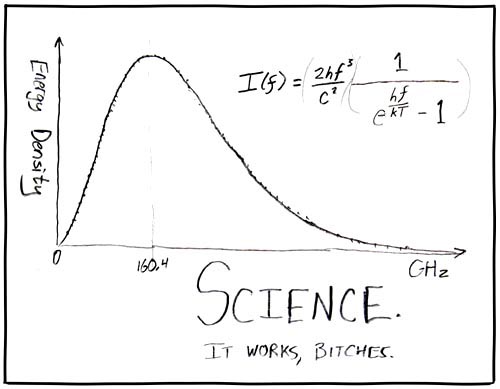
Portal Philosophy Especially with Portal 2, the franchise goes beyond even those utilitarian domains. The addition of the character Cave Johnson allows the game to slyly lead the player towards an exploration of just what is science? The apocalyptic results of Aperture Science's experiments, it seems quite evident that science is notthat they've been doing. But what I really appreciate about the game is that it doesn't hammer you with "This is how you define science, idiot!" Instead, it rewards your critical thinking. Because science is precisely how you win the game: observing, hypothesizing, testing and checking results. Think critically and creatively at the same time.
Beyond an inductive exploration of the nature of science, the story and characters of both Portal and Portal II can lead us to all manner of investigations : about power (economic, technological, political), about history (what happened to the game world?), and even aboutfeminism (a computer game where the female characters outnumber and consistently out-think the male ones is a rare gem, but that brings us back to ideas of power and the binary trap of patriarchy...)
...Speedy Thing Comes Out.
This is really just a sketch of some of the issues that I want to explore more with Portal and Portal II. There are already quite a few folks out in the blogosphere that have ruminated on some of these things (especially GlaDOS) and over the next while I start talking about those ideas. I'm actually developing this for the Popular Culture Association and American Culture Associate national conference in April.
For the most part, I hate musicals. It's funny, because films like The Sound of Music, The King and I, Singing in the RainandMy Fair Lady were staples of my childhood cinematic experience - and pleasant ones, too. But the shine wore off. At some point, I began to see through the veneer of their engaging numbers to the stale, even oppressive, narratives that they couched. I began to be irritated that the story would come to a halt just to have a character sing and dance, illustrating some idea that was terribly plain to see.
John Lasseter has it exactly right: "Story is king." Cinema is primarily a narrative medium, and that which does not serve the story does not make a good film. And most musicals are chock of time-wasters, from a narrative point of view. Worse, their spectacle is a distraction from a misogynistic message, despite the central presence of some dynamic female leads. Sound of Music? Daddy needs to be king. The King and I? The king is daddy "from bee to bee to bee." Singing in the Rain? Life is only good with the right man. My Fair Lady? Yeah...
So, it's rare that I like a musical of any kind, but when I do, I really, really love it. Irwin Winkler's 2004 De-Lovely is one of my rare treasures. It's self-aware but not insular; it's counter-cultural but doesn't alienate; it's clear without being facile and sharp but not smug. And it has a kick-asssoundtrack.
De-Lovely received a lot of mixed reviews, with only a 53% Metacritic rating and even worse on Rotten Tomatoes (only 48% fresh). Some of the more even-handed (but still mixed) reviews bemoan the lack of engaging characterization, its historical inaccuracies, or a incoherent, unsatisfying narrative. The individual elements are fantastic, they agree, especially the updated musical numbers (a gamut of Porter's hits sung by a cavalcade of contemporary stars like Elvis Costello, Alanis Morrisset and Robbie Williams). But each damns the film with faint praise like "But aside from the major annoyance that it is just plain hard to sit through,De-Lovely is a great movie."
There's something important to note about so many of the reviews: the authors can't help themselves from dropping references to Cole Porter and his songs. It's as if the postmodern aesthetic of bricolage and hypertextuality is catching. It seems to me that these reviewers are obtusely missing the point, griping about the very things that make De-Lovely great.
Unconventional narrative. The stories ofDe-Lovely (there are several) consist of frames within frames within frames. To begin, of course, the film itself is framed; a finger pointing to itself, holding itself up as an object of scrutiny and, as we will see, interaction. Within the cinematic frame, there is the central narrative frame of Cole to reviewing his life as replayed on a musical stage. Within that frame exist the musical numbers themselves. Notably, these spiral back out as a commentary on Porter's life itself, and even further as commentary on the film and, by extension on cinema itself. Heady stuff, huh? And yet, this doesn't distract one iota from John Barrowman's and Kevin Kline's sexually-charged duet, "Night and Day."
Subject matter. I can count on one hand the number of mainstream films about a white marriage. De-Lovely is the only one that dares to talk about a heterosexual love story within a such an arrangement. and, contrary to what so many critics may think, it's the characters that really pull this off. Maybe it's just too much of a stretch to imagine someone as strong and self-possessed as Ashley Judd's Linda Lee Porter being so understanding, so clear-headed and yet so obviously conflicted about her marriage to - let's be frank - a ragingly promiscuous homosexual man. And while Kline plays Porter as a child-like epicurean, the shades of regret and doubt that slowly invade his demeanor are masterfully done. De-Lovely does a courageous job of telling the story of the Other - and moreover, letting the Other tell its own story.
Adaptation through transformation, not copying. The use of contemporary artists to re-interpret Cole Porter's hits did not sit well with some literal-minded critics. I think it's a master-stroke, because this is a movie. That is, this is a fictional recreation of a myth and not even necessarily the myth of Cole Porter. Indeed, you could say that the essential truth of Cole Porter is not to be found in this film. And this is a good thing. De-Lovely understands that "truth" is not found; it's made. It's a construct, and a complex, slippery one at that. This attitude is mirrored in the music production: Porter's songs are stripped bare of their original sound and rebuilt from the ground up. The result is universally fantastic: the lyrics and melody are still there, the traces of Porter's genius, but the surrounding sensibilities are refreshingly different.
Let's revisit my statement that Lasseter has it exactly right. Is story king anymore? Yes - and no. De-Lovely eschews the conventional narrative even of the biopic (which is usually a myth of redemption) for a much more complex and unstable collection of vignettes that nonetheless cohere breathlessly. It's one of those rare films that has faith that we can follow along while it plays fast and lose with time and even space. I love how Jonathan Pryce's character enters into the scene with Louis Meyer: he talks to the screen! And the screen talks back.
It's not just self-congratulatory, navel-gazing post-modernism here. It's an invitation, and incitement to action. Question. Meddle. Turn your constraints into tools. It's the essence of great cinema: an engaging story with a novel twist on old stories that tells us something about ourselves, then turns us around and sends out the theater door with a fire in our belly.
I haven't downloaded the app yet, but you can listen to just the music and read a great review over at NPR. As always, Björk is an acquired taste but her songs reward patience. The lead tune, "Moon," starts off like some distracted chick in the corner of the coffee shop. (You know, that creepy one who's still kind of cute feral kitten kind of way). But then it finds its groove, the melody evolves and picks up the instrumentation and... wow. Haunting, sweet, rich and very, very different: everything I want from Björk album.
Marian has the gift of a strong sense of melody, the craft to tell a good story and the courage to defy songwriting conventions. (A double album, half of which is devoted to Alaska? A nearly eight-minute epic called "Anchorage"?) To boot, she's got a sharp wit: "The Avocado Song" is one of most original metaphors for a break-up song I've ever heard.
I'll be honest, I haven't had the time to give Feist's latest a really close listen. But the overall sparseness of it is powerful. I love the sense I get of sitting in some Paris loft listening to the musicians rehearse. Metals has that immediacy, along with the sharp, shimmering tonality of Feist's signature vocal. Forget about the run-away "1234," this is the girl from Let it Die all grown up.